

Aircon repair cost in Malaysia: what drives the price
By John · Updated 2026-07-13
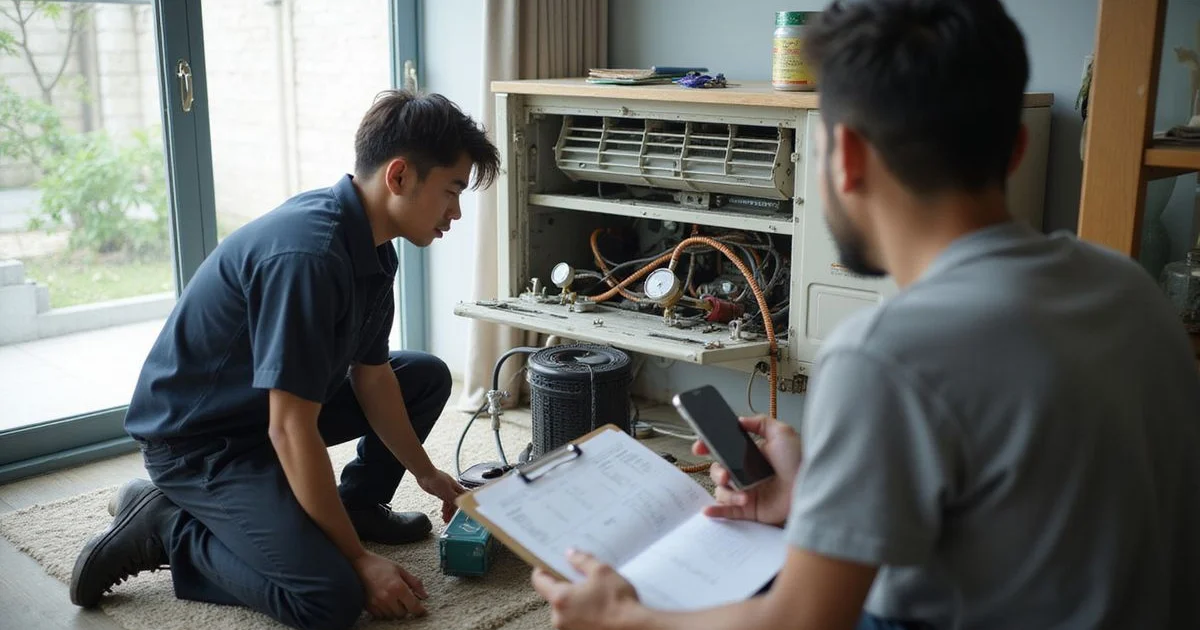
Aircon repair pricing in Malaysia swings more than almost any other job in this trade, because the cost is tied entirely to what’s actually broken. A capacitor swap and a compressor replacement can differ by a factor of ten, which is why a repair quote is only meaningful once you know the diagnosis behind it. Our homepage tracks nearly 500 scored contractors across this exact spread of repair work, which is worth a look once you know what you’re dealing with.
What common faults cost
| Fault | Typical cost range | Why |
|---|---|---|
| Capacitor replacement | Low, often under RM150 | Cheap part, quick swap |
| Refrigerant gas top-up | RM 80-200 | Depends on gas type (R32, R410A, older R22) and amount needed |
| Blocked drain / condensate leak | Low to moderate | Mostly labour, unless drain pump replacement is needed |
| PCB (circuit board) repair | Moderate | Board cost varies a lot by brand and model availability |
| Fan motor replacement | Moderate | Part cost plus labour to access and swap |
| Compressor replacement | High, often several hundred to over RM1,000 | Major component; sometimes close to the cost of a new budget unit |
A gas top-up alone is usually a stop-gap rather than a fix. If the unit lost gas because of a leak, the gas will run low again, so most contractors recommend finding and sealing the leak point before recharging, which changes the scope and the price from a simple top-up.
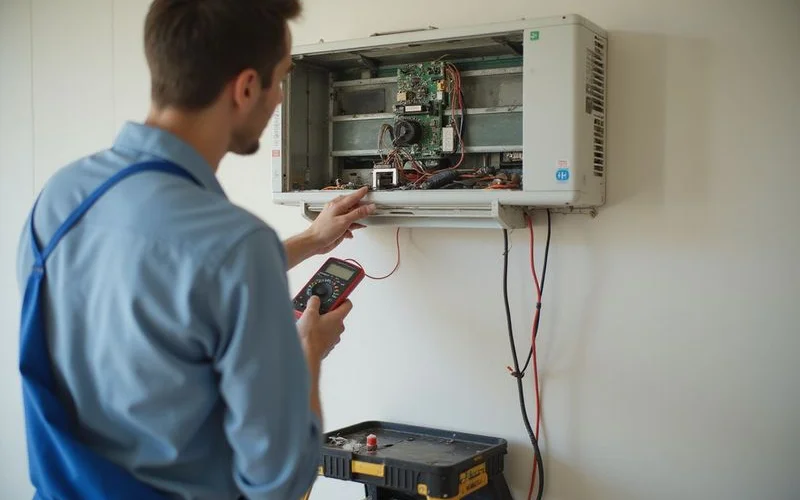
What actually drives the price up
Part availability. Common parts for mainstream brands are usually in stock and cheaper. Less common models, or discontinued lines, can mean a longer wait and a higher part cost.
Refrigerant type. Newer gas types like R32 and R410A generally cost more per kilo than older R22, but R22 stock is also getting harder to find for older units, which can push its price up too.
Repair versus replace math. Once a unit crosses 8 to 12 years old, a major fault like a failed compressor often costs close to what a new budget unit would run. At that point, replacing the whole unit can be the more sensible spend even though the sticker price looks bigger upfront.
How a repair job usually unfolds
Most repair visits start the same way regardless of the fault: the technician asks what symptoms you’ve noticed, then inspects both the indoor and outdoor units before naming a cause. For a gas-related issue, that means pressure testing the line and checking for the leak point rather than just topping up and hoping. For an electrical fault, it means testing the capacitor and inspecting the PCB and wiring rather than swapping parts by guesswork. The quote you get should follow directly from that inspection, not precede it.
Simple faults like a tripped capacitor, a clogged filter, or a blocked drain pipe are often fixed on the same visit. Compressor or PCB failures may need a part ordered in, especially for less common models, which is worth asking about upfront so you’re not caught off guard by a return visit.
Why diagnosis matters more than the quote
Reviewers across the directory consistently name honest diagnosis as one of the things that separates a repair contractor worth calling back from one they wouldn’t use again. A technician should ask about symptoms, noise, smell, water leak, poor cooling, error codes, before opening the unit, then explain what they find rather than jumping straight to a part replacement. If you’re calling a repair technician every few months for the same unit, that usually points to something deeper than a one-off fault: a persistent leak, a badly installed unit, or a unit simply near the end of its working life.
Our aircon repair hub lists contractors across Malaysia with review histories you can check for exactly this pattern, honest diagnosis versus quick part-swapping, before you book.
Getting a fair repair quote
Ask for parts and labour broken out separately, and ask what warranty applies to the repair itself, even one to three months on labour is a reasonable minimum to expect. A technician using proper gauges and tools rather than working by feel is a good sign, and a written quote before work starts protects you from a bill that grows once the unit is already opened up. Our ranking method weighs how consistently contractors are reviewed for this kind of transparency, not just their average star rating.
FAQ
- How much does a typical aircon repair cost in Malaysia?
- It depends heavily on the fault. A refrigerant gas top-up often runs roughly RM80 to RM200 depending on gas type and unit size. Compressor replacement is far more, often several hundred ringgit to over RM1,000, since it's frequently cheaper to replace the whole unit if the compressor has failed on an older system. PCB repairs and fan motor replacements usually sit somewhere in between.
- Why do repair quotes vary so much between contractors?
- Diagnosis quality is the biggest factor. A technician who properly tests before quoting will price for the actual fault, while one who guesses may quote for parts you don't need or miss the real issue and leave you paying for a second visit.
- Is it worth repairing an old unit or should I just replace it?
- If the unit is past 8 to 12 years old and the fault is the compressor, replacement is often the better value since a new compressor alone can cost close to a new budget unit. For younger units with a simpler fault like a capacitor or blocked drain, repair is almost always the cheaper route.
- How do I avoid paying for unnecessary parts?
- Ask for a breakdown of parts versus labour before agreeing to any work, and ask the technician to explain the actual fault rather than just naming a part to replace. A contractor confident in the diagnosis should be able to explain it in plain terms.