

Choosing the right aircon specialist for a landed house vs a high-rise condo
By John · Updated 2026-08-24
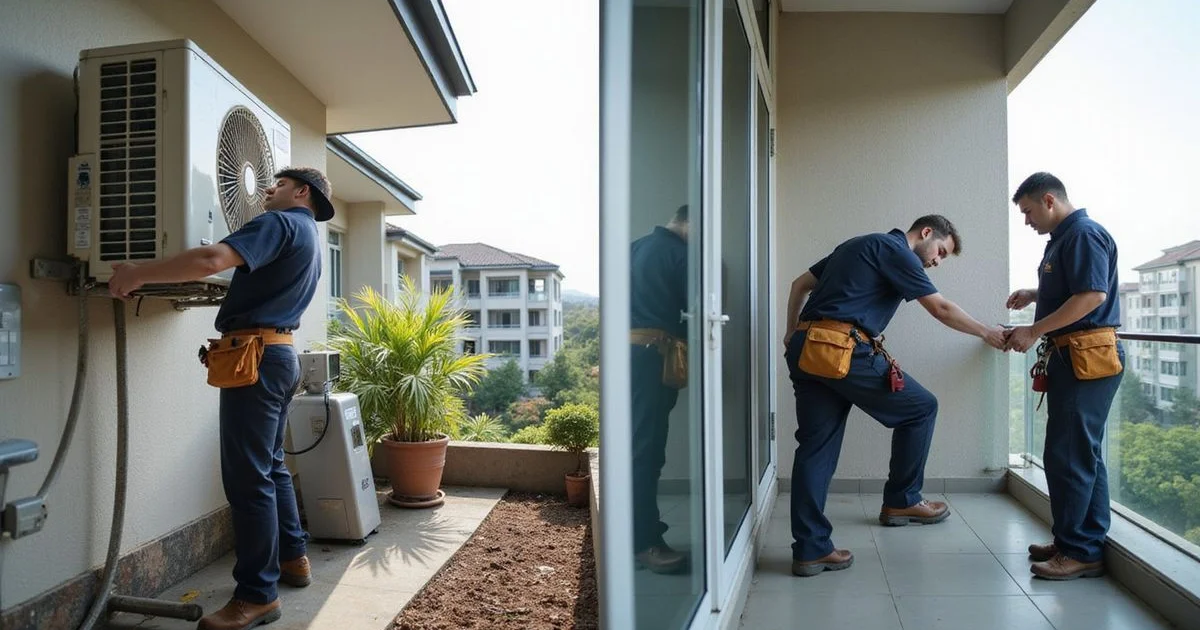
An aircon contractor who does great work on a landed house isn’t automatically the right fit for a high-rise condo job, and the reverse is also true. The physical differences between the two property types change what actually matters when you’re choosing who to hire.
What’s different, property by property
| Factor | Landed house | High-rise condo |
|---|---|---|
| Outdoor unit access | Usually ground level or easy roof access | Often requires height access equipment |
| Building approval needed | Rarely, beyond your own preference | Often yes, via management or MC by-laws |
| Piping route | Generally straightforward along exterior walls | May cross shared risers or facades |
| Common issues | Dust and debris from ground-level exposure | Humidity, ventilation, and shared-wall noise considerations |
| Typical extra cost driver | Piping length, wall type | Access equipment, scheduling around building rules |
Why access changes the job
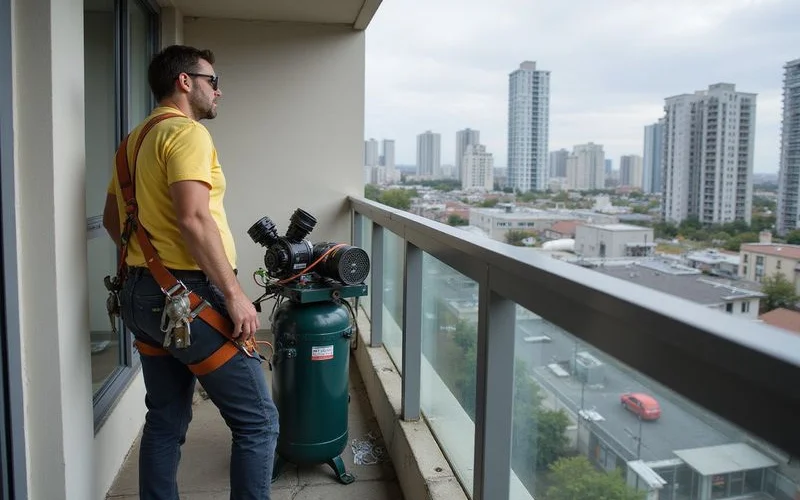
For a landed house, most outdoor units sit at ground level or on a single-storey roof, both relatively straightforward for a technician to reach with standard equipment. In a high-rise condo, especially anything beyond the first few floors, reaching the outdoor unit safely may need specialised access equipment or coordination with building management for lift access to move equipment up. A contractor without experience in high-rise work may take longer, charge more once they realise the access complexity, or in the worst case, cut corners on safety.
Why building rules matter for condos specifically
Condo and apartment installations often need sign-off from the joint management body or management corporation before work starts, covering where units can be mounted and sometimes which contractors are approved to work on shared facades. A contractor unfamiliar with this process may not think to check, which can mean a completed installation that later needs relocating. Our guide to condo strata rules for outdoor aircon units covers what to check with management before you book. Landed house owners generally don’t face this layer at all, since the property and its exterior are entirely under their own control.
Servicing differs too, not just installation
The same split shows up once the unit is in and needs regular servicing. A landed house technician can usually get straight to the outdoor unit without much fuss, which keeps routine visits quick. A condo servicing visit may need the technician to bring access equipment for the outdoor unit or coordinate lift access again, which is worth factoring into how far in advance you book, especially if the building has restrictions on when contractors can access common areas or lifts for equipment.
Semi-detached and terrace homes sit in between
Not every landed property is a fully detached bungalow. Semi-detached and terrace houses sometimes have outdoor units mounted higher up or in narrower side alleys shared with a neighbouring unit, which brings in a bit of the access consideration usually associated with condos, along with the courtesy of checking noise or placement with an adjoining neighbour. It’s worth mentioning your specific layout to a contractor rather than assuming “landed house” always means simple ground-level access.
What to ask depending on your property type
For a landed house, focus questions on piping length, brand and capacity fit for the room, and standard workmanship checks like vacuum pumping and drainage setup. For a condo, add specific questions: has the contractor worked in high-rise buildings, do they carry appropriate safety equipment for height access, and are they familiar with your building’s specific rules on outdoor unit placement.
Getting quotes that reflect your actual property
When requesting quotes, mention your property type upfront rather than letting a contractor assume based on a generic phone conversation. A contractor who quotes a condo job the same way they’d quote a landed house is either underestimating the access complexity, which shows up later as a scheduling delay or an added charge, or padding the price to cover uncertainty they haven’t actually confirmed. Either way, being specific from the first call tends to produce a more accurate number and a smoother job.
Finding the right fit
Our residential and home aircon specialist hub lists contractors across Malaysia, and checking a contractor’s review history for mentions of the property type you actually have is a faster way to judge fit than assuming any residential specialist covers both equally well. If this is your first unit rather than a replacement, our guide for first-time aircon buyers covers sizing and brand tier alongside the contractor questions above. The directory homepage also covers installation and servicing categories if you’re comparing options beyond a single specialist. Our ranking method explains how we weigh review consistency into each contractor’s score.
FAQ
- Does a condo installation really need different skills than a landed house?
- Yes, mainly around access and building rules. A landed house typically has ground-level or easy roof access for the outdoor unit, while a condo often means working at height, coordinating with building management, and following strata rules on where units can be mounted.
- Is it more expensive to install or service aircon in a high-rise?
- Often somewhat, yes, mainly due to access. A high floor may need specialised access equipment or coordination with building management for lift access to carry equipment, which adds time and sometimes cost compared to a ground-level landed home job.
- What should I ask a contractor before hiring them for a condo job?
- Ask if they've worked in high-rise buildings before, how they handle height access safely, and whether they're familiar with your building's specific strata rules on outdoor unit placement.
- Are there aircon issues more common in landed houses than condos, or vice versa?
- Landed houses often deal with more outdoor debris and dust affecting the condenser given ground-level exposure, while condos more often face humidity and ventilation differences at height and shared-wall considerations for noise.