

Buying your first aircon unit for a new home in Malaysia
By John · Updated 2026-07-09

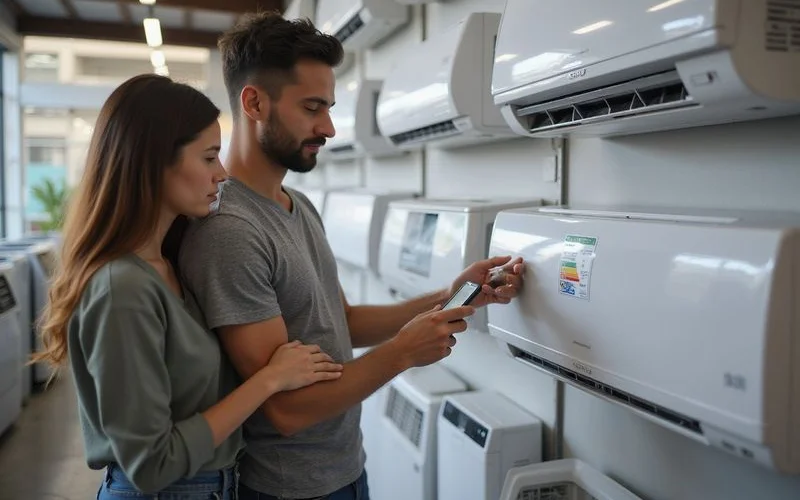
Buying your first aircon unit means making a handful of decisions at once, capacity, brand, how many rooms, and which contractor to trust, usually while standing in a showroom or scrolling quotes on your phone. Getting the sizing and brand tier roughly right upfront saves you from two common outcomes: an oversized unit that wastes money, or an undersized one that runs constantly and still doesn’t cool the room properly. This directory’s homepage is a reasonable first stop for comparing scored contractors once you’ve worked out roughly what you need.
Getting the size right
Aircon capacity is measured in BTU (British Thermal Units), and the right size depends on floor area, how much sun the room gets, and how many people typically use it. As a working range, plan on roughly 500 to 600 BTU per square metre of floor area, then adjust:
- Add roughly 10 to 15 percent for a top-floor or west-facing room that gets strong afternoon sun.
- Add extra for a kitchen or any room with heat-generating appliances.
- Add a bit more for each additional regular occupant beyond one or two.
A 15 square metre bedroom with two occupants and average sun exposure works out to roughly 8,500 to 9,000 BTU, which is commonly sized as a 1.0 HP unit in Malaysia. A living room of similar size with more sun and more people in it regularly would push toward 1.5 HP.
Choosing a brand tier
| Tier | Good fit for | Trade-off |
|---|---|---|
| Budget/local | Occasional-use rooms, guest bedrooms | Lower upfront cost, generally less efficient long-term |
| Standard (e.g. Daikin, Panasonic) | Most bedrooms and living rooms | Balanced cost and efficiency, the sensible default |
| Premium/inverter | Rooms run many hours daily | Higher upfront cost, pays back faster on rooms used constantly |
For a first home, the standard tier covers most rooms well. Reserve the premium tier for a room you know will run long hours every day, since that’s where better inverter efficiency actually saves you money over the unit’s life rather than just sitting on the spec sheet.
One unit per room, or a multi-split system
A separate split unit for each room is the simpler choice for a first home. Each unit has its own outdoor condenser, so a fault in one doesn’t affect the others, and servicing or repairing one unit doesn’t touch the rest of the house. A multi-split system, several indoor units run off one shared outdoor unit, saves on outdoor unit space and can look tidier from outside, but a problem with the shared outdoor unit affects every room connected to it. Unless space for outdoor units is genuinely tight, separate units are usually the lower-risk starting point.
Budgeting for the whole first year, not just the install
The install cost is only the first line item. Set aside a rough figure for a basic service every two to three months and factor in that a chemical wash, usually needed every six to twelve months, costs more than a routine clean but is what keeps the unit smelling and running like new. Buyers who budget only for the installation are often the ones surprised by a servicing bill a few months later, when in reality it was always part of owning the unit, not an extra.
It’s also worth asking the seller or installer about the unit’s expected electricity draw at your chosen capacity, since running a unit that’s undersized for the room means it works harder and longer to reach a comfortable temperature, which shows up as a higher power bill than a correctly sized unit would produce for the same room. For a fuller breakdown of what drives the install quote itself, our aircon installation cost guide covers capacity, brand tier and piping complexity in detail.
Picking a contractor for your first install
This is where review history matters more than the lowest quote. Our aircon installation hub lists contractors ranked on consistency across past jobs, not just a star average. Ask any shortlisted contractor to walk you through their BTU sizing for your specific room rather than quoting off a generic chart, and confirm vacuum pumping is a standard part of their process rather than an optional extra, since skipping it is a common shortcut that shows up later as reduced cooling.
Reviewers across this directory repeatedly flag clean workmanship and technicians who explain their reasoning as the strongest signal of a contractor worth booking again for future rooms. Our ranking method is built to surface exactly that kind of consistency, which matters more for a first-timer than chasing the cheapest number on a phone quote.
FAQ
- How do I know what size unit I need?
- As a rough guide, expect somewhere around 500 to 600 BTU per square metre of floor area, adjusted up for a top-floor or west-facing room and for more people usually in the room. A 15 sqm bedroom with two occupants and average sun exposure lands around 8,500 to 9,000 BTU, which most installers would size as a 1.0 HP unit.
- Is a more expensive brand actually worth it for a first-time buyer?
- A mainstream brand tier is a reasonable default for most homes: better energy efficiency and quieter operation than a budget unit, without paying premium prices for features a first home usually doesn't need. Save the premium tier for a room you'll run long hours daily, where the efficiency gain pays back faster.
- Should I install one unit per room or a multi-split system?
- For a first home, one split unit per room you actually use daily is usually simpler and cheaper to service and repair later, since each unit runs independently. A multi-split system saves on outdoor units but means one outdoor unit failure can affect multiple rooms.
- What's the biggest mistake first-time buyers make?
- Undersizing to save money upfront. A unit that's too small for the room runs constantly, cools poorly, and wears out faster, which usually costs more in electricity and early repairs than paying for the right size from the start.
Related on this site
- Browse aircon installation providers
- What a new aircon installation costs in Malaysia
- Aircon installation in Malaysia: what happens, step by step
- Installing an outdoor aircon unit in a condo: strata rules to check first
- Choosing the right aircon specialist for a landed house vs a high-rise condo
- All guides →