

Getting your aircon ready for Malaysia's hot season and monsoon humidity
By John · Updated 2026-08-18
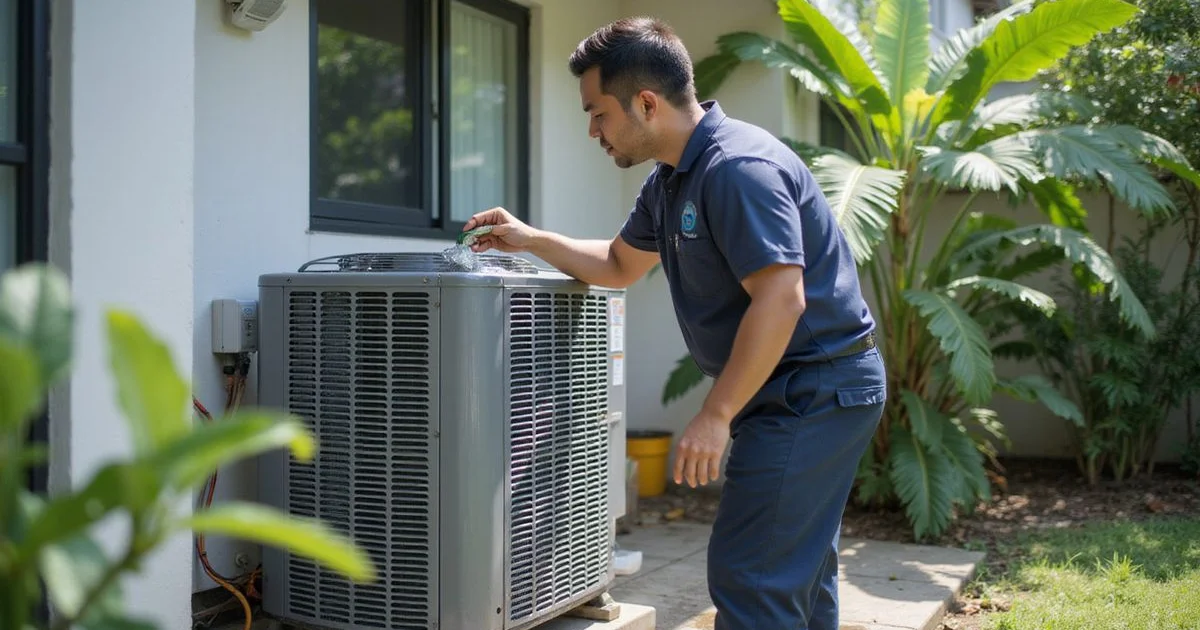
Malaysia doesn’t get four seasons, but it does get real variation: stretches of intense heat where aircon units run almost non-stop, and monsoon periods where humidity climbs even when the temperature itself isn’t at its peak. Both put different kinds of stress on a unit, and a bit of planned maintenance before either stretch hits is far cheaper than an emergency callout in the middle of it.
This kind of planning takes less effort than it sounds, since it’s really just moving your regular servicing appointment earlier rather than adding anything new to the routine.
Why timing your servicing matters
A unit with a marginal issue, a slight gas leak, a coil that’s a bit dirtier than it should be, a fan running slightly rough, often keeps working fine under normal conditions. Push that same unit to run for hours longer each day during a heat stretch, and the marginal issue tends to become the reason it fails outright. Getting ahead of this with a service before the hottest weeks reduces the odds of your unit being the one that dies on the worst possible day.
A seasonal checklist
| Task | Best timing | Why |
|---|---|---|
| Filter clean | Every 2-3 months | Reduces strain and keeps airflow efficient |
| Chemical wash | Every 6-12 months, timed before peak heat or humidity | Clears buildup before the unit is pushed hardest |
| Gas pressure check | Alongside a service, or if cooling feels weaker | Low gas makes the compressor work harder |
| Drainage check | Before monsoon humidity picks up | Prevents condensate overflow and ceiling leaks |
| Outdoor unit clearance | Ongoing, check before hot stretches | Debris and dust restrict airflow to the condenser |
What monsoon humidity specifically does
Higher ambient humidity means the unit has to work harder to pull moisture out of the air, not just lower the temperature. This adds to the moisture already sitting on the coil from normal condensation, which is exactly the condition that encourages mould growth. If you notice a musty smell showing up more during humid stretches even without a change in how hot it is, that’s a reasonable sign the coil needs attention sooner rather than waiting for its next scheduled wash. Our guide to mould and indoor air quality from a dirty aircon covers the warning signs worth watching for.
Outdoor units take the brunt of weather changes
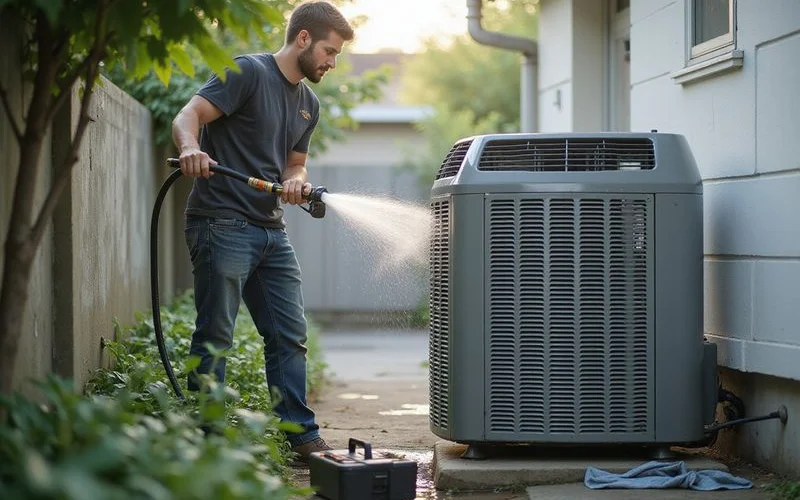
While most of the seasonal attention goes to the indoor unit, the outdoor condenser is directly exposed to whatever the weather brings. Heavy monsoon rain can wash debris into the unit’s fins, and dry, dusty stretches let dust settle and restrict airflow around the coil. Both reduce how efficiently the unit can dump heat, which means it runs longer and harder to hit the same cooling target. A quick visual check every few weeks, clearing leaves, dust, or anything blocking airflow around the outdoor unit, is a low-effort habit that pairs well with the scheduled servicing above.
If you’re planning a longer trip during a hot stretch
Leaving a property empty during Malaysia’s hottest weeks is also a reasonable time to have a unit checked, since an aircon that’s been idle can sometimes reveal a slow gas leak or drainage issue once it’s switched back on and pushed hard again. A quick service before you leave, or arranging for someone to check the property periodically, reduces the chance of coming back to a bigger problem than the one you left with.
Getting ahead of it instead of reacting to it
The households that avoid mid-heatwave breakdowns tend to be the ones who treat servicing as scheduled maintenance rather than a response to a problem. Booking a chemical wash a few weeks before the hottest stretch typically means shorter wait times too, since demand for both routine and emergency service climbs once everyone’s unit is running flat out at the same time.
Our aircon servicing and chemical wash hub lists contractors across Malaysia you can book ahead of the rush, and the wider directory covers repair and installation if the unit needs more than a routine service. Our ranking method explains how we score contractors on consistency across seasons, not just a single good review.
FAQ
- Does Malaysia's climate really call for seasonal aircon prep?
- Malaysia doesn't have the sharp seasonal swings of temperate countries, but there are still hotter, drier stretches and more humid monsoon periods, and units tend to fail more often when they're already running hardest, which is worth timing maintenance around.
- How often should servicing happen if I want to avoid breakdowns during hot stretches?
- A basic filter check every two to three months for daily-use units, and a chemical wash every six to twelve months, timed so the wash happens before rather than during the hottest and most humid stretches, gives the unit its best shot at running without issues.
- Does humidity affect the aircon differently than heat does?
- Yes. Heat pushes the unit to work harder to cool the air, while high humidity adds moisture load, which increases mould risk on the coil and can affect how effectively the unit dehumidifies the room even if the temperature reading looks fine.
- What's the most common breakdown during Malaysia's hottest stretches?
- Units that already had a marginal issue, like a slow gas leak or a dirty coil, tend to fail outright once they're pushed to run near-constantly during the hottest weeks, rather than developing a brand new fault.
Related on this site
- Browse aircon servicing & chemical wash providers
- What aircon servicing and chemical wash costs in Malaysia
- DIY aircon cleaning vs a professional chemical wash: what you can actually do yourself
- What to expect during an aircon servicing or chemical wash appointment
- Mould and poor indoor air quality from a dirty aircon: warning signs and health risks
- All guides →