

Mould and poor indoor air quality from a dirty aircon: warning signs and health risks
By John · Updated 2026-07-29
This is general information about aircon maintenance and indoor air quality, not medical advice. If you or someone in your home has ongoing respiratory symptoms, speak to a doctor.
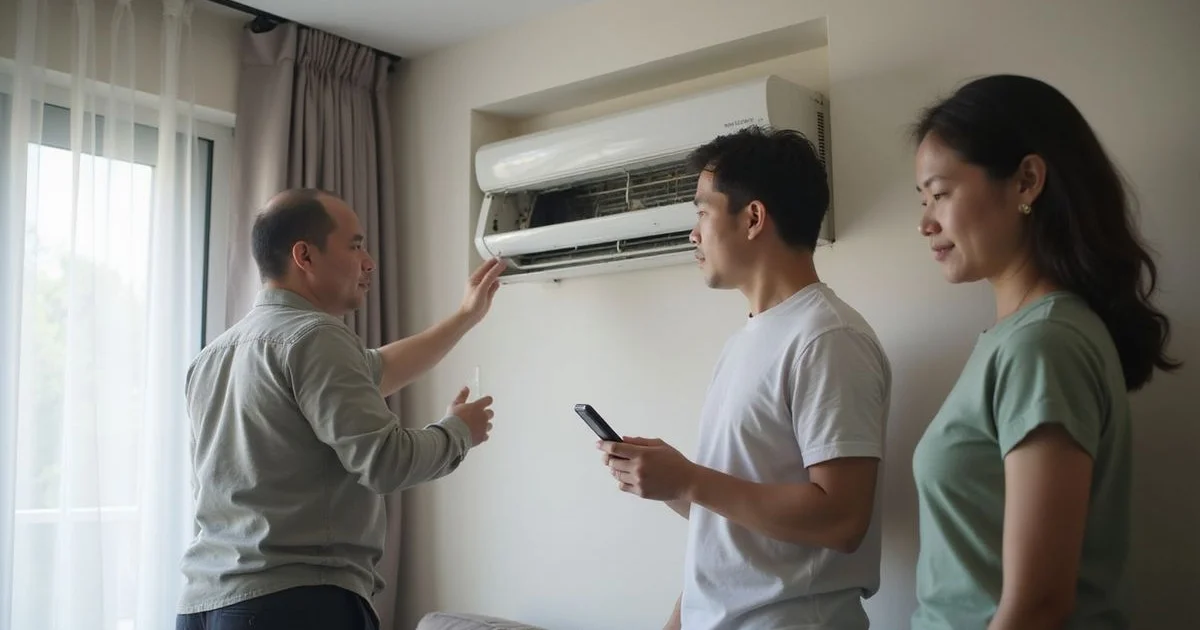
A musty smell when you switch on the aircon is one of the most common complaints in Malaysian homes, and it’s not just unpleasant. It usually means there’s mould or built-up grime somewhere inside the unit that a normal wipe-down hasn’t reached, and it’s worth taking seriously rather than just living with the smell.
Why aircon units are prone to mould
The indoor unit’s coil gets cold and damp every time the aircon runs, which is completely normal. The problem is what collects on that dampness over time: dust, skin cells, and airborne particles that get pulled in with the air. In Malaysia’s warm, humid climate, that combination of moisture and organic material is close to ideal for mould growth, especially in units that don’t get a proper deep clean often enough.
Warning signs to watch for
| Sign | What it usually means |
|---|---|
| Musty smell on startup | Mould or bacteria buildup on the coil |
| Visible dark spots near vents or filter | Mould growth that’s already visible, not just internal |
| Weak airflow compared to when new | Buildup restricting air movement through the coil |
| Water dripping from the indoor unit | Often linked to a dirty coil causing ice buildup that later melts and drips |
| Worsened allergy or sinus symptoms indoors | Possible reaction to airborne mould spores or dust being circulated |
Why a basic clean often isn’t enough
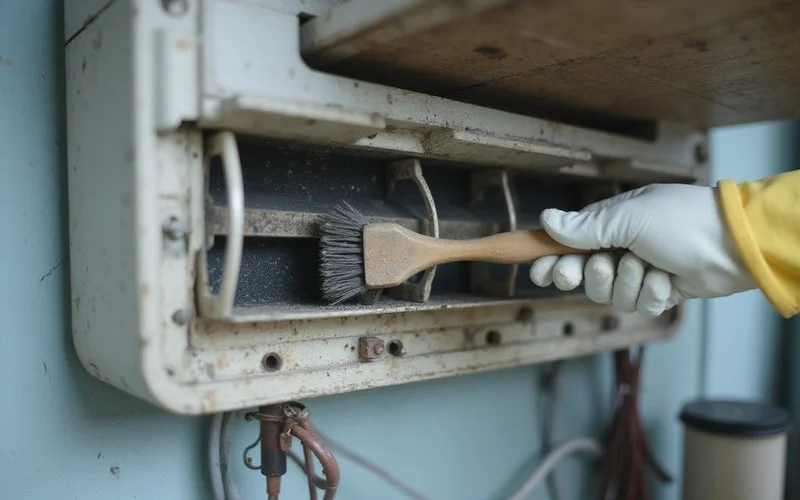
A basic filter clean removes the dust that collects on the visible filter, which is useful but limited. Mould tends to sit deeper, on the coil itself and on the blower fan, parts that stay hidden behind the front panel during normal use. That’s precisely the gap a chemical wash is built to close: the technician dismantles those components, treats them directly with a cleaning solution, then rinses and reassembles the unit. If the musty smell or weak airflow persists after a routine filter clean, that’s usually the signal you’re dealing with buildup a basic service can’t reach.
Reducing the risk between services
Running the unit’s fan-only mode for a few minutes after switching off the cooling helps dry out the coil rather than leaving it damp, which slows mould growth between services. Keeping the filter clean on a regular schedule, roughly every two to three months for daily use, also reduces how much material makes it further into the unit. Neither of these replaces a proper chemical wash when the smell or symptoms are already there, but they help stretch the time between services.
Ducted and cassette units carry a bit more risk
Wall-mounted split units are the easiest to inspect and clean, since the coil sits relatively close to the visible panel. Ceiling cassette and ducted systems hide more of their surface area behind the ceiling itself, which means mould and dust have more room to build up unnoticed before a smell or symptom becomes obvious. If your home runs a cassette or ducted system, it’s worth treating the recommended servicing interval as a firmer schedule rather than something to push back when the unit still seems to be working fine, since problems in these systems tend to be further along by the time they’re noticeable.
When to book a proper wash
If the smell, visible spots, or weak airflow don’t clear up after cleaning the filter yourself, or if someone in the home has noticed symptoms that seem tied to when the aircon runs, it’s worth booking a chemical wash rather than waiting. Our aircon servicing and chemical wash hub lists contractors in Malaysia who handle this properly, and the directory homepage covers the full range of aircon services if the problem turns out to be something else, like a drainage fault. Our ranking method weighs how consistently a contractor’s past customers describe the actual job done, not just their star rating.
FAQ
- How does mould end up inside an aircon unit?
- The indoor unit's coil stays damp during normal operation from condensation. In Malaysia's humidity, dust and moisture together create the exact conditions mould needs, especially if the unit isn't cleaned regularly.
- What are the warning signs of a mouldy aircon?
- A musty smell when the unit starts up, visible dark spots around the vents or filter, weak airflow compared to when the unit was new, and in some people, worsened allergy or sinus symptoms while the unit is running.
- Can a normal filter clean fix a mould problem?
- Usually not on its own. Mould tends to build up on the coil and blower fan, parts a normal filter clean doesn't reach. A chemical wash, which dismantles and treats those parts directly, is what actually clears it.
- Is this something to worry about for children or people with asthma?
- Poor indoor air quality can aggravate existing respiratory conditions in some people. If someone in the home has asthma or allergies and symptoms seem to track with aircon use, it's worth having the unit checked and mentioning it to a doctor if symptoms persist.
Related on this site
- Browse aircon servicing & chemical wash providers
- What aircon servicing and chemical wash costs in Malaysia
- DIY aircon cleaning vs a professional chemical wash: what you can actually do yourself
- What to expect during an aircon servicing or chemical wash appointment
- Getting your aircon ready for Malaysia's hot season and monsoon humidity
- All guides →